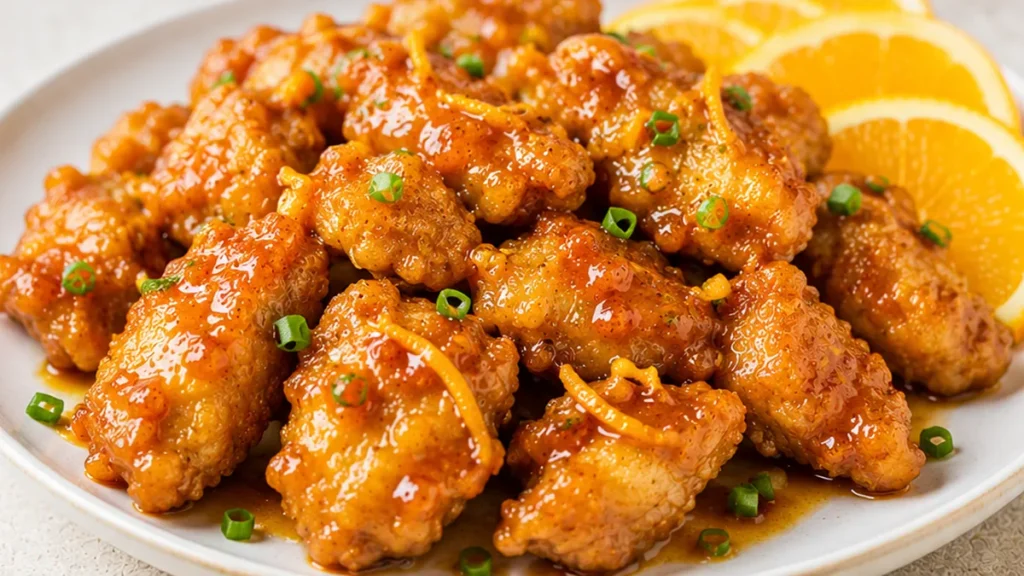
This keto orange chicken recipe is the ultimate solution for anyone craving bright Asian-inspired flavors without the carbs. It transforms simple ingredients into a dish that boasts both incredible crispiness and a delectable tangy-sweet glaze. This recipe works as a weeknight dinner that brings the takeout experience home. Preparing this keto orange chicken involves a clever breading alternative and a quick sauce, making it accessible even for those new to low-carb cooking. The combination of tender chicken and a zesty orange sauce ensures every bite is bursting with flavor, proving that healthy eating doesn’t mean sacrificing taste.
Key takeaways
- The crispiness of keto orange chicken relies on a dry chicken surface, a dual coating of finely crushed pork rinds and coconut flour, and proper frying temperatures.
- Uniform chicken pieces and quick saucing off-heat are crucial for maintaining texture.
- Troubleshooting common issues involves adjusting oil temperature, ensuring dryness, and managing sauce consistency.
Crispy Keto Orange Chicken: Tangy & Juicy!
Ingredients
- 1 1/2 lbs chicken breast
- 1 cup Pork Rinds
- 1/2 cup Coconut flour
- 1 tsp black pepper
- 1 tsp Pink Himalayan Salt
- Coconut Oil (For Cooking)
- 1 medium orange
- 2 cloves garlic, peeled
- 1/2 inch fresh ginger, peeled
Instructions
- Combine the pork rinds, coconut flour, and black pepper in a blender or food processor and pulse until it has made a fine powder. Shake this mix out into a medium bowl.
- Pat your chicken breasts dry and then cut them into small cubes about ” inch pieces. Sprinkle with salt and set aside.
- Add 2 tablespoons of coconut oil for frying into the large skillet. Toss a handful of chicken cubes in the pork rind mix, shake off excess and add them into the skillet. Make sure the pieces aren crowding the skillet, you will have to cook them in batches. Cook for 2-3 minutes or until browned then use tongs to turn them over and cook another 3 minutes, until amber brown.
- Remove from the skillet and place on a paper towel lined plate. Add in the next batch of chicken and repeat until all of the chicken is done.
- Make the sauce: Heat a small sauce pot over medium high heat. Add coconut oil to the small sauce pot and stir to combine.
- Using a zester, zest the whole orange (should yield about 1 tablespoon), and the garlic cloves and ginger into a small bowl and set aside. Cut the orange in half.
- Once the coconut oil has melted, lower the heat to medium and add in the orange zest mix, then squeeze half the orange juice into the sauce pot as well. Stir well and let it come to a simmer, let it simmer while you finish cooking the chicken. Stir it occasionally. Once it is thick and glaze-like remove it from the heat.
- Transfer the chicken to a serving platter or bowl. Pour the orange glaze all over it and enjoy! This is great over greens or cauliflower rice!
Notes
The technique that makes it
Achieving a truly crispy coating on keto orange chicken without traditional breading requires a specific two-step process. The foundation of this crispiness lies in the combination of finely crushed pork rinds and coconut flour. Pork rinds, when pulverized into a powder, provide a light, airy, and exceptionally crunchy texture that mimics traditional breadcrumbs. Coconut flour, while absorbent, also contributes to a golden-brown crust when fried. The key is to ensure the chicken pieces are thoroughly coated in this mixture. For optimal results, the chicken should be cut into uniform, bite-sized pieces. This ensures even cooking and consistent crispiness. Before coating, it’s beneficial to pat the chicken pieces very dry with paper towels. Moisture is the enemy of crispiness. The coating adheres best to dry surfaces. The cooking method is also crucial. Pan-frying in a generous amount of hot coconut oil allows for even heat distribution and rapid crisping. Maintaining the correct oil temperature (around 350-375°F or 175-190°C) is vital. Too low, and the chicken will absorb oil and become greasy; too high, and the coating will burn before the chicken is cooked through. A final toss in the warm orange sauce, done quickly off the heat, ensures the chicken remains crispy rather than becoming soggy.
Troubleshooting
- Failure: Chicken coating is soggy.
Fix: Ensure chicken pieces were patted completely dry before coating. Also, verify the cooking oil was hot enough (350-375°F) and that the chicken was not overcrowded in the pan, which lowers oil temperature. - Failure: Coating is burnt but chicken is undercooked.
Fix: The cooking oil temperature was likely too high. Reduce the heat slightly and cook in smaller batches to maintain a more consistent temperature. - Failure: Orange sauce is too thin.
Fix: Simmer the sauce uncovered for a few extra minutes to allow excess liquid to evaporate and thicken the sauce naturally. Alternatively, whisk in a small amount of xanthan gum (1/4 tsp at a time) until desired consistency is reached. - Failure: Chicken pieces are unevenly cooked.
Fix: Ensure all chicken pieces are cut to a uniform size before coating and frying. This promotes even cooking times.
Substitutions
- Pork Rinds: Crushed unsweetened pork rinds are the primary binder for crispiness. If unavailable, finely ground unsweetened pork cracklings can be used, though texture may vary slightly. For a vegetarian or vegan option, finely ground unsweetened plant-based crisps or a mix of almond flour and psyllium husk can be experimented with, but expect a different textural outcome.
- Coconut Flour: Almond flour can be substituted for coconut flour in the coating. Use an equal amount of finely ground almond flour. This will result in a slightly different crispiness and browning characteristic.
- Coconut Oil: Any high-heat cooking oil suitable for frying, such as avocado oil or ghee, can be used instead of coconut oil. The flavor profile might be subtly altered depending on the oil chosen.
- Orange: For a less sweet or more tart flavor, a mix of orange and lemon juice can be used. Ensure to adjust the sweetness with a keto-friendly sweetener if necessary, as lemon juice is more acidic.
Pro tips
- Don’t overcrowd the skillet when frying the chicken; cook in batches to ensure even browning and crispiness. Overcrowding lowers the oil temperature and can lead to steamed, not fried, chicken.
- For perfectly cooked chicken, ensure the internal temperature reaches 165°F (74°C) using a meat thermometer. This guarantees safety without drying out the meat.
- This keto orange chicken can be stored in an airtight container in the refrigerator for up to 3-4 days. For best texture, reheat in a skillet or oven rather than a microwave to maintain some crispness.
This keto orange chicken is a fantastic way to enjoy a favorite dish while staying true to your low-carb lifestyle. Experiment with different spices or a dash of chili flakes for an extra kick! Enjoy this guilt-free indulgence.
More from Keto Dinners & Mains →
Frequently asked questions
Why do pork rinds make the chicken crispy?
Pork rinds, when finely ground, create a light and airy breading that crisps up exceptionally well when fried. Their porous structure allows them to absorb less oil than traditional flours, contributing to a satisfying crunch that holds up even after being coated in sauce.
Can I bake this instead of frying?
While frying yields the best crispiness, you can bake it. Arrange coated chicken on a wire rack set over a baking sheet. Bake at 400°F (200°C) for 20-25 minutes, flipping halfway, until golden and cooked through. The crispiness will be less pronounced than with frying.
How do I make the orange sauce sugar-free?
The sauce uses fresh orange juice, which contains natural sugars. For a truly sugar-free version, you would need to significantly reduce or omit the orange juice and rely on orange extract and a keto-friendly sweetener like erythritol or stevia for flavor and sweetness.
What is the best way to cut the chicken?
Cut the chicken breast into uniform, bite-sized pieces, approximately 1-inch cubes. This ensures that all pieces cook evenly and achieve the same level of crispiness and doneness. Consistent size is key for successful frying.