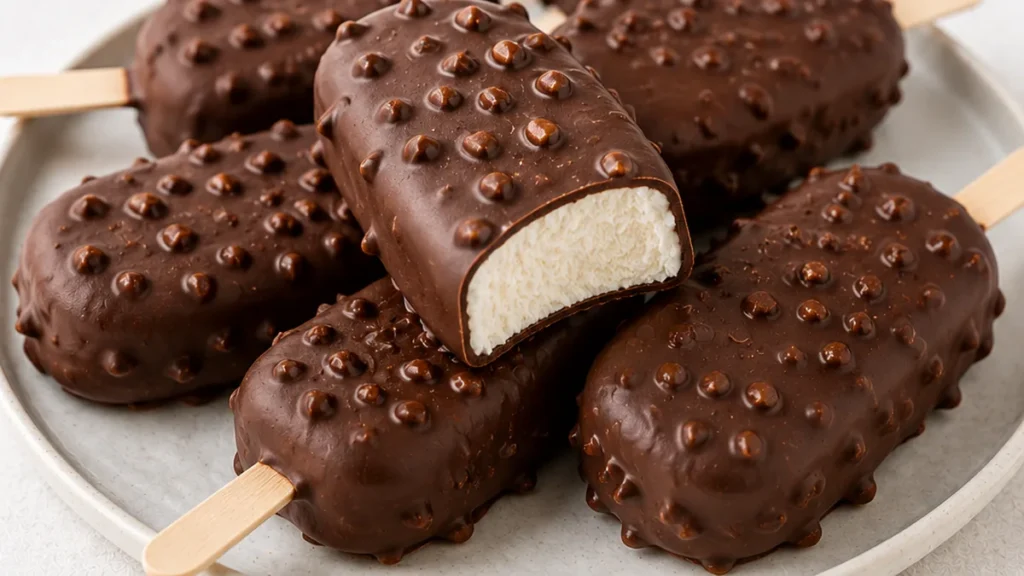
These keto ice cream bars are the ultimate solution for anyone craving a frozen treat without the carbs. This recipe delivers a rich, creamy texture and a satisfying chocolate shell, making it a perfect low-carb indulgence. Crafted with simple ingredients, these keto ice cream bars are not only delicious but also surprisingly easy to prepare, offering a guilt-free dessert option that fits seamlessly into a ketogenic lifestyle. Enjoy the pure pleasure of a classic ice cream bar, reinvented for your health goals.
Key takeaways
- Achieve a creamy keto ice cream by using high-fat dairy and non-dairy creams, and a powdered sweetener to avoid grittiness.
- A proper chocolate shell requires melting sugar-free chips with coconut oil for a quick-hardening coating.
- Prevent iciness through thorough chilling and rapid freezing.
- Adjust substitutions carefully to maintain texture and flavor.
CRAVE-WORTHY Keto Ice Cream Bars! So Good!
Ingredients
- 1 can (13.5 oz) Unsweetened Coconut Cream
- 3/4 cup powdered sweetener (erythritol or monk fruit blend)
- 1.5 cups Heavy Whipping Cream
- 1.5 cups Sugar-Free Chocolate Chips
- 3 tablespoons Coconut Oil
- 1 teaspoon vanilla extract (optional)
Instructions
- In a large bowl, combine the unsweetened coconut cream, powdered sweetener, vanilla extract (if using), and heavy whipping cream. Mix well with a whisk until the sweetener is fully dissolved and the mixture is smooth.
- Carefully pour the creamy mixture into popsicle molds. Ensure they are filled evenly. Place the filled molds in the freezer for a minimum of 8-10 hours, or preferably overnight, until completely solid.
- To remove the frozen bars, briefly submerge the bottom of each mold in warm water for a few seconds. Gently pull the bars out and place them on a baking sheet lined with parchment paper. Return the baking sheet to the freezer for an additional 30 minutes to firm up again.
- While the bars are refreezing, prepare the chocolate coating. In a microwave-safe bowl, combine the sugar-free chocolate chips and coconut oil. Microwave in 30-second intervals, stirring well after each interval, until the chocolate is fully melted and smooth. Be careful not to burn it.
- Transfer the melted chocolate mixture into a wide-mouth mason jar or a deep glass. The container should be deep enough to allow an ice cream bar to be fully submerged.
- Working quickly, take one frozen bar from the freezer. Dip it into the melted chocolate, rotating the jar or bar to ensure all sides are evenly coated. The chocolate should harden almost instantly.
- Place the dipped bar back onto the parchment-lined baking sheet. If desired, immediately sprinkle with chopped nuts or other keto-friendly toppings before the chocolate sets completely. Repeat the process with the remaining bars. Serve immediately or store in the freezer.
Notes
The technique that makes it
The success of these keto ice cream bars hinges on achieving the right texture and preventing ice crystal formation, which is crucial for a creamy, scoopable experience without the sugar. The key lies in the combination of high-fat ingredients and proper chilling. Heavy whipping cream provides the necessary fat content for richness and contributes to a smoother texture when frozen. Unsweetened coconut cream, also rich in fat, further enhances creaminess and adds a subtle tropical note. The powdered sweetener is essential not only for sweetness but also because granular sweeteners can contribute to a gritty texture and affect freezing point. Using a powdered version ensures it dissolves completely. The sugar-free chocolate chips, when melted with coconut oil, create a hard chocolate shell. The coconut oil lowers the melting point of the chocolate, allowing it to harden quickly and snap when bitten, a characteristic of premium ice cream bars. The optional vanilla extract enhances the overall flavor profile. Proper chilling of the base mixture before churning (if applicable, though this recipe is no-churn) and then thorough freezing of the bars are paramount. The rapid freezing of the chocolate coating is also important for its texture.
Troubleshooting
- Icey Texture: If your ice cream bars are too icy, it often means there were too many ice crystals. Ensure your heavy cream and coconut cream were well-chilled before mixing, and that the mixture was frozen quickly and thoroughly. Avoid partial thawing and refreezing.
- Chocolate Shell Cracking Too Much: If the chocolate shell shatters excessively, the chocolate mixture might have been too cold when applied, or the ice cream base was too hard. Slightly warm the chocolate mixture and ensure the ice cream bars are firm but not rock-solid before dipping.
- Sweetener Grittiness: If you detect a gritty texture from the sweetener, ensure you are using a powdered sweetener and that it was fully dissolved into the cream mixture. Stirring vigorously or using a sweetener specifically designed for cold applications can help.
- Lack of Firmness: If the bars are too soft, they may not have frozen long enough or the fat content might be slightly lower than ideal. Ensure they are frozen solid for at least 4-6 hours, and consider using full-fat coconut cream.
Substitutions
- Sweetener: While erythritol or monk fruit blends are common, you can experiment with allulose or xylitol (note: xylitol is toxic to dogs). The key is to use a powdered form for best results. The sweetness level may need adjustment based on your chosen sweetener.
- Coconut Cream: Full-fat canned coconut milk can be used, but ensure it’s well-chilled so the cream separates. Heavy whipping cream can also be increased, but this might slightly alter the final flavor profile.
- Sugar-Free Chocolate Chips: Any brand of keto-friendly chocolate chips will work. You can also use unsweetened baking chocolate chopped finely and sweetened to taste with a keto sweetener.
- Coconut Oil: Unsalted butter or MCT oil can be substituted for coconut oil in the chocolate coating. This might subtly change the flavor and hardening properties of the shell.
Pro tips
- For the creamiest texture, ensure your coconut cream is well-chilled before mixing. This helps it emulsify better with the heavy cream.
- If your powdered sweetener doesn’t dissolve completely, gently warm a small portion of the heavy cream and whisk it in to aid dissolution, then cool before combining with the rest.
- When melting the chocolate and coconut oil, avoid overheating. Overheated chocolate can seize or become grainy. Low and slow is key, stirring frequently.
- For perfect dipping, the ice cream bars must be fully frozen and the chocolate coating should be warm but not hot. The contrast in temperature helps create that instant, crisp shell. If the chocolate cools too much, another quick 15-second microwave burst keeps it fluid.
These keto ice cream bars are a delightful way to enjoy a classic treat while staying true to your low-carb goals. Experiment with different keto-friendly toppings like crushed nuts or shredded coconut for added texture and flavor. Enjoy every guilt-free bite!
More from Keto Desserts & Sweets →
Frequently asked questions
What is the best way to ensure a smooth, non-icy texture?
Using full-fat, well-chilled heavy whipping cream and coconut cream, along with a powdered sweetener, is crucial. Ensure the mixture is thoroughly combined and frozen quickly and completely to minimize ice crystal formation. Avoid partial thawing and refreezing.
Can I use a liquid sweetener instead of powdered?
While possible, liquid sweeteners may not integrate as smoothly and can sometimes lead to a slightly icier texture. If using liquid, ensure it’s fully dissolved and consider that it might slightly alter the freezing point and overall consistency.
How do I get a good, snappy chocolate shell?
Melt the sugar-free chocolate chips with coconut oil over low heat or in short microwave bursts. The coconut oil helps the chocolate harden quickly and become brittle when it hits the cold ice cream. Ensure the ice cream is frozen solid before dipping.
What happens if my chocolate shell is too thick or too thin?
If the shell is too thick, add a little more coconut oil to thin it. If it’s too thin and won’t coat properly, the chocolate mixture might be too warm, or you may need to slightly increase the chocolate chips or coconut oil ratio.