The secret to perfectly roasted sheet pan sausage and vegetables lies in proper spacing on the pan; crowding leads to steaming, not caramelization. This sheet pan sausage recipe simplifies dinner without sacrificing flavor or nutrition. Crafted for efficiency, this dish is ideal for busy weeknights, offering a complete meal with minimal cleanup. It’s a versatile foundation for a healthy diet, allowing for easy substitutions based on seasonal availability or dietary preferences.
Key takeaways
- Proper heat ensures even cooking and flavor development.
- Slicing sausage thinly aids in quick cooking.
- Avoid overcrowding the pan to prevent sogginess.
- Use a mix of seasonings for enhanced flavor.
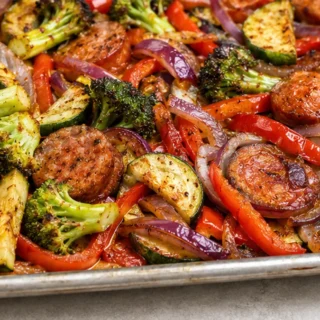
Sheet Pan Sausage & Veggies
Ingredients
- 1 (14 ounce) Andouille sausage, sliced into 1/4 inch slices
- 2 cups broccoli florets
- 2 cups bell peppers, cut into 1-inch strips (red, yellow, or orange peppers)
- 2 cups zucchini, sliced in half rounds
- 1 red onion, sliced into strips
- 1/4 cup olive oil
- 1 tablespoon Dijon mustard
- 1 teaspoon garlic powder
- 1 teaspoon onion powder
- 1 teaspoon paprika
Instructions
- Preheat oven to 400 degrees F. Line an extra large sheet pan (21X15x1) or two smaller sheet pans with parchment paper. Add the sausage, broccoli, bell peppers, zucchini, and red onion to the pan, ensuring even distribution.
- In a small bowl, whisk together the 1/4 cup olive oil and 1 Tablespoon Dijon mustard. Pour over the sausage and veggies and sprinkle with 1 teaspoon garlic powder, 1 teaspoon onion powder, 1 teaspoon paprika, and salt and pepper to taste. Toss together well with tongs or your hands. Spread in an even layer on the pan, ensuring vegetables have room to roast and do not steam.
- Bake for 15 minutes. Toss mixture and rotate the pan and bake for another 10-15 minutes or until sausage is browned and veggies are tender-crisp to your likeness.
- Remove from oven and sprinkle with desired amount of parmesan if desired and garnish with fresh parsley.
Video
Notes
The technique that makes it
The key to a successful sheet pan sausage dish lies in the even distribution of heat and the proper timing of cooking each ingredient. The Maillard reaction, which occurs when proteins and sugars in the sausage and vegetables are exposed to high heat, creates a desirable caramelization that enhances flavor and texture. It’s crucial to preheat the oven to a high temperature (around 425°F) to ensure that the sausage browns nicely while the vegetables roast to tender perfection. Additionally, the use of olive oil not only aids in heat conduction but also helps to create a slight emulsion with the Dijon mustard, which coats the ingredients and allows for even seasoning.
Troubleshooting
- Problem: Vegetables are soggy.
Fix: Ensure that the vegetables are cut evenly and not overcrowded on the pan; overcrowding traps steam and prevents proper roasting. - Problem: Sausage is undercooked.
Fix: Make sure to slice the sausage thinly (1/4 inch) for quicker cooking and check the internal temperature, which should reach at least 160°F. - Problem: Lack of flavor.
Fix: Ensure you use enough seasoning; the combination of Dijon mustard, garlic powder, onion powder, and paprika should be evenly distributed. Consider marinating the sausage beforehand for deeper flavor. - Problem: Uneven cooking.
Fix: Stir the ingredients halfway through cooking to promote even browning and ensure that all items are exposed to the heat evenly.
Substitutions
- Andouille sausage: Use chicken sausage or turkey sausage for a lighter option while maintaining flavor.
- Broccoli: Substitute with green beans or asparagus for a different texture and taste.
- Zucchini: Swap with yellow squash to add variety while keeping a similar cooking time.
- Dijon mustard: Use whole grain mustard or a spicy brown mustard for a different flavor profile.
Pro tips
- For crispier vegetables, ensure they are spread in a single layer on the sheet pan, using two pans if necessary. My first attempt at a sheet pan meal was a bit soggy because I overloaded the pan.
- To check for doneness, ensure the sausage reaches an internal temperature of 160°F (71°C).
- Leftovers can be stored in an airtight container in the refrigerator for up to 3-4 days. Reheat in the oven at 350°F for 10-15 minutes, or until warmed through, to maintain texture.
Embrace the simplicity and deliciousness of this sheet pan sausage and veggie recipe. Experiment with different spices or vegetables to make it your own. Enjoy the ease and flavor!
Frequently asked questions
Can I use different types of sausage?
Yes, you can substitute Andouille sausage with other types such as chicken, turkey, or Italian sausage. Just ensure that the sausage is fully cooked before serving.
What vegetables can I add to this recipe?
You can customize the vegetables based on your preference. Consider adding carrots, Brussels sprouts, or sweet potatoes for different flavors and textures.
How do I store leftovers?
Store any leftovers in an airtight container in the refrigerator for up to 3 days. Reheat in the oven or microwave until warmed through.
Can I make this dish ahead of time?
Yes, you can prep the ingredients ahead of time and store them in the fridge. Just toss them with the oil and seasonings before roasting when you’re ready to cook.
More from Keto Dinners & Mains →