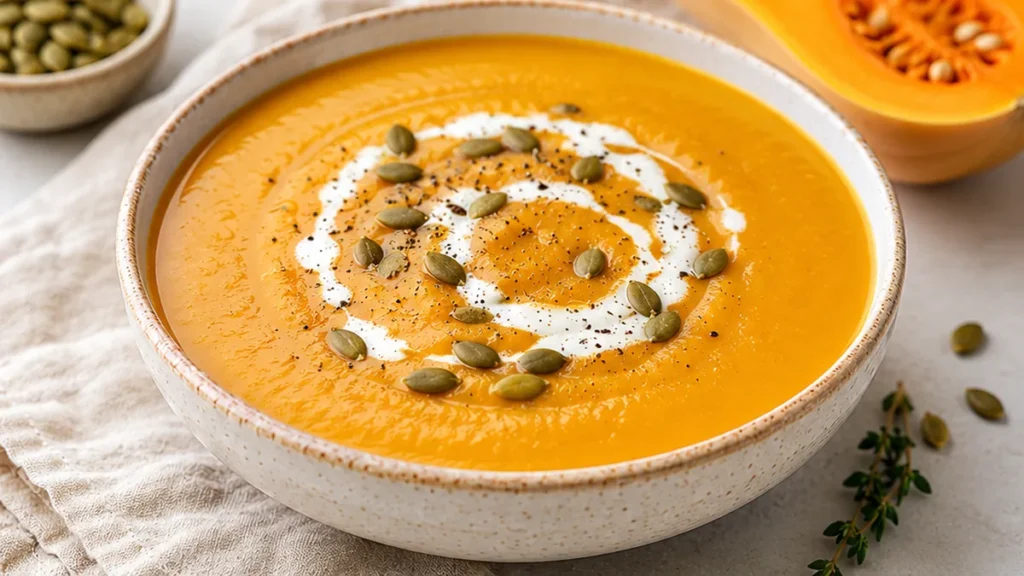
Keto butternut squash soup is a truly satisfying and flavorful dish, perfect for cozy evenings. This recipe highlights the natural sweetness of butternut squash, enhancing it with a blend of aromatic spices for a comforting, low-carb meal. I recall the first time I made this, I was skeptical about achieving creaminess without heavy cream in the base, but roasting the butternut squash first truly transforms its texture and flavor, creating a naturally rich soup. This keto butternut squash soup offers a delightful balance of sweet and savory notes, making it an ideal choice for anyone looking for a healthy yet indulgent option. It’s also incredibly versatile, allowing for minor adjustments to suit your personal taste preferences while maintaining its keto-friendly profile. This dish proves that healthy eating doesn’t have to compromise on taste.
Key takeaways
- Roasting butternut squash enhances sweetness and texture.
- Blend thoroughly for a creamy, emulsified soup.
- Adjust broth and spices to achieve desired consistency and flavor.
- Troubleshoot thinness by simmering or using a flour slurry.
Creamy Keto Butternut Squash Soup
Ingredients
- 1 tbsp Olive oil
- 6 cups Butternut Squash
- 3 Cloves Garlic
- 3/4 tsp Salt
- 1/4 tsp Black Pepper
- 4 cups Chicken Broth
- 1/8 tsp Ground Cloves
- 1/4 tsp Nutmeg
- 1/2 tsp Cinnamon
- 1/2 tsp Thyme
Instructions
- Preheat the oven to 425 degrees Fahrenheit.
- Microwave each whole butternut squash for 6-8 minutes, then cool for 10 minutes.
- Cut squash in half, remove skin and seeds, then cube into 1-inch pieces.
- Toss squash and garlic with olive oil, salt, and pepper on a baking sheet. Bake for 40 minutes.
- Simmer chicken broth with ground cloves, nutmeg, cinnamon, and thyme for 40 minutes.
- Blend roasted squash, garlic, and simmered broth until smooth and creamy.
- Serve warm, garnished with heavy cream and pumpkin seeds.
Notes
The technique that makes it
The key to a truly creamy and rich keto butternut squash soup lies in the careful cooking and blending of the squash. Unlike traditional soups that might rely on starchy vegetables or dairy for thickness, this recipe achieves its luxurious texture through the natural starches released from the butternut squash itself when cooked properly. Roasting the butternut squash before simmering it in the broth is a highly recommended technique. Roasting caramelizes the natural sugars in the squash, deepening its flavor and making it easier to break down. When pureed, the cooked squash fibers emulsify with the liquid, creating a velvety consistency without the need for heavy cream or thickeners. Ensure the squash is tender all the way through before blending. Overcooking can make it watery, while undercooking will result in a less smooth, potentially grainy texture. The blending process itself is crucial. Using an immersion blender directly in the pot or transferring the soup in batches to a high-powered countertop blender will break down the squash fibers effectively. For an exceptionally smooth soup, consider passing it through a fine-mesh sieve after blending, though this is often unnecessary if the squash is cooked and blended thoroughly.
Troubleshooting
- Problem: Soup is too thin.
Fix: Simmer the soup uncovered for an additional 10-15 minutes to allow excess liquid to evaporate. Alternatively, you can create a slurry with 1 tablespoon of almond flour or coconut flour mixed with 2 tablespoons of cold water, then whisk it into the simmering soup until thickened. - Problem: Soup is too thick.
Fix: Gradually whisk in more chicken broth or water, a quarter cup at a time, until the desired consistency is reached. - Problem: Flavor is bland.
Fix: Taste and adjust seasoning. Add more salt and pepper as needed. The spices (cloves, nutmeg, cinnamon, thyme) are subtle; consider adding a tiny pinch more of one or a combination, or a dash of cayenne pepper for a slight kick. - Problem: Gritty or fibrous texture.
Fix: This usually indicates the squash was not fully cooked or blended sufficiently. Reheat the soup and blend again for longer, or pass it through a fine-mesh sieve to remove any remaining fibrous bits.
Substitutions
- Butternut Squash: For a similar flavor profile and texture, you can substitute with acorn squash or kabocha squash. The cooking time may vary slightly. For a lower-carb option, consider using cauliflower florets, though the flavor will be different and less sweet.
- Chicken Broth: Vegetable broth can be used for a vegetarian or vegan version. Ensure it’s a good quality, low-sodium broth to control the overall saltiness.
- Olive Oil: Avocado oil or melted butter can be used as a direct substitute for sautéing the aromatics.
- Spices: While the specific blend of cloves, nutmeg, cinnamon, and thyme is key to the flavor, you can adjust ratios to your preference. A pinch of ginger can add warmth, or a small amount of sage can complement the thyme.
Pro tips
– For a smoother soup, ensure the roasted butternut squash is very tender before blending. If needed, cook for an additional 5-10 minutes until easily pierced with a fork. – Make ahead: This soup can be made up to 3-4 days in advance and stored in an airtight container in the refrigerator. Reheat gently on the stove or in the microwave. – If you don’t have fresh garlic, you can substitute with 1 teaspoon of garlic powder, added to the broth along with the other spices. – For extra richness, swirl in a tablespoon of full-fat coconut milk or heavy cream per serving just before serving.
This keto butternut squash soup is a testament to how flavorful and comforting low-carb meals can be. Enjoy this delightful recipe and share your favorite toppings!
More from Keto Sides & Veggies →
Frequently asked questions
Can I make this soup ahead of time?
Yes, this keto butternut squash soup can be made ahead. It stores well in the refrigerator for up to 3-4 days. The flavors often meld and deepen overnight, making it even more delicious the next day. Reheat gently on the stovetop or in the microwave.
How can I make this soup dairy-free?
This recipe is naturally dairy-free as written. It uses the natural creaminess of the butternut squash and chicken broth for its base. If you wish to add extra richness, consider a splash of full-fat coconut milk or unsweetened almond milk during the final simmering stage.
Is butternut squash truly keto-friendly?
Butternut squash is higher in carbohydrates than many keto vegetables. While it can be enjoyed in moderation on a keto diet, portion control is important. This recipe is designed for those following a flexible keto approach or who are in nutritional ketosis and can accommodate the net carbs.
What is the best way to store leftovers?
Store leftover soup in an airtight container in the refrigerator. It should remain fresh for 3 to 4 days. For longer storage, you can freeze the soup in individual portions using freezer-safe containers or bags for up to 2-3 months.