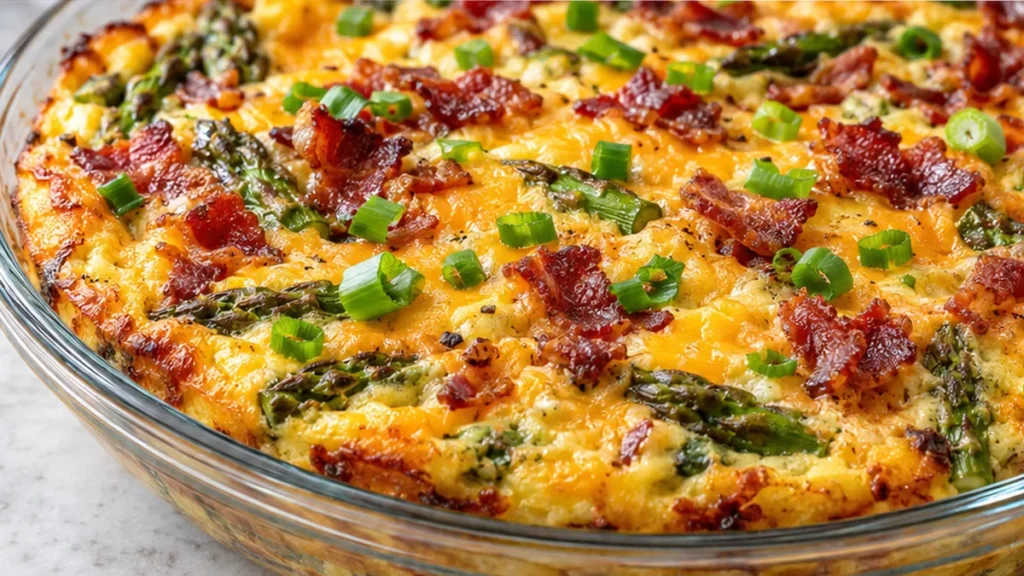
This crispy bacon asparagus frittata is a simple yet satisfying dish. Packed with protein and fresh vegetables, it’s perfect for breakfast or brunch.
Key takeaways
- Use the right egg-to-serving ratio for optimal texture.
- Control cooking temperature to prevent burning.
- Pre-cook vegetables to avoid sogginess.
- Experiment with ingredient swaps for different flavors.

Crispy Bacon & Asparagus Frittata
Ingredients
- 8 slices of bacon, cut in 1-inch pieces
- 1 cup asparagus, cut into 1/2 inch pieces
- 2 cloves garlic, minced
- 10 large eggs
- 1 cup shredded cheddar cheese
- 1/4 cup heavy whipping cream
- 1/4 cup parsley, chopped
- 2 tablespoons chopped green onions
- 1/2 teaspoon salt
- 1/4 teaspoon black pepper
Instructions
- Preheat oven to 350 degrees F and spray a 9 or 10 inch baking dish with cooking spray.
- In a medium skillet, cook the bacon until crispy. With a slotted spoon remove from pan and drain bacon on paper towels. Drain bacon drippings, leaving about 1 tablespoon in the pan.
- Cook asparagus in reserved bacon drippings for a couple of minutes or until desired tenderness. Add the garlic and cook for an additional minute. Remove from heat and set aside.
- In a large bowl, combine the eggs, 1/2 the bacon, 1/2 the cheddar cheese, cream, parsley, 1/2 the green onions, asparagus, salt, and pepper. Whisk thoroughly and pour into prepared pan.
- Bake for 15-20 minutes or until egg is puffed and set in the middle. Add the remaining cheese for the last couple of minutes of baking to melt. Remove from oven and sprinkle with remaining bacon and green onions. Serve immediately!
The Role of Eggs in Frittata Structure
Eggs are the backbone of a frittata, providing structure and moisture. The ideal ratio is typically 2 to 3 eggs per serving, which allows for a creamy texture without being overly dense. The proteins in the eggs coagulate when heated, giving the frittata its characteristic set. For a fluffier frittata, consider whisking the eggs vigorously to incorporate air, which can enhance the final texture.
Understanding the Perfect Cooking Technique
Cooking a frittata requires careful temperature control. Start by sautéing the bacon and asparagus over medium heat to render the fat and cook the vegetables evenly. Once the eggs are added, reduce the heat to low. This allows the frittata to set gently without burning the bottom. Cooking times can vary, but a total of 20-25 minutes is typical, with the frittata being finished in the oven to ensure an even cook.
Common Issues and How to Fix Them
- Issue: Undercooked center. Fix: Ensure the heat is low enough and consider covering the pan during cooking to trap heat.
- Issue: Overcooked edges. Fix: Lower the heat and monitor closely, as the edges can cook faster than the center.
- Issue: Soggy texture. Fix: Precook vegetables to remove excess moisture before adding them to the egg mixture.
Ingredient Swaps and Their Impacts
- Swap: Spinach for asparagus. Result: A milder flavor and quicker cooking time, but less crunch.
- Swap: Cheddar cheese for feta. Result: A creamier texture with a tangy flavor, but higher fat content.
- Swap: Turkey bacon for regular bacon. Result: A leaner dish, though it may lack some of the rich flavor.
Unique Characteristics of Bacon and Asparagus Frittata
This frittata stands out due to the combination of crispy bacon and tender asparagus, which not only adds flavor but also texture contrast. The smokiness from the bacon complements the earthiness of the asparagus, creating a balanced dish that is both satisfying and nutritious.
How to Prepare a Frittata in Advance for Easy Meal Planning
Making a crispy bacon and asparagus frittata ahead of time can save you valuable cooking time during busy mornings. To prepare it in advance, cook the frittata as instructed and allow it to cool completely. Once cooled, slice it into portions and store each piece in an airtight container in the refrigerator for up to four days. For longer storage, consider freezing individual portions. Wrap each slice tightly in plastic wrap and then place in a freezer-safe bag or container. When ready to eat, reheat in the microwave or oven until warmed through. This method not only preserves the frittata’s texture but also allows the flavors to develop further, making it even more delicious.
Adapting Serving Sizes for Different Occasions
Scaling the recipe for a crispy bacon and asparagus frittata is straightforward. If you need to serve a larger group, simply multiply the ingredient quantities by the number of servings desired. For example, if the original recipe serves four, doubling the ingredients will yield eight servings. However, be mindful of your cooking equipment; a larger frittata may require a bigger oven-safe skillet or baking dish. Adjust the cooking time accordingly, as a thicker frittata may take longer to set. Conversely, if you’re making a smaller batch, you can use a smaller pan, which will also reduce cooking time. It’s essential to monitor the frittata closely to ensure it doesn’t overcook.
Choosing the Right Equipment for Optimal Cooking Results
The type of equipment you use can significantly impact the outcome of your crispy bacon and asparagus frittata. A heavy-bottomed oven-safe skillet, preferably cast iron, provides even heat distribution, ensuring that the frittata cooks uniformly without burning. Non-stick pans are also effective, but be cautious with high heat, as they can warp over time. If you’re baking the frittata in the oven, a glass or ceramic baking dish can be used, but ensure it is well greased to prevent sticking. Additionally, using a lid while cooking on the stovetop can help trap steam, aiding in cooking the top of the frittata evenly.
Seasonal Variations and Ingredient Quality Impacting Flavor
The freshness and quality of your ingredients can drastically influence the taste of your crispy bacon and asparagus frittata. In spring, opt for fresh, tender asparagus for a sweeter flavor and vibrant color. During the off-season, frozen asparagus can be a convenient alternative, though it may require slightly different cooking methods to avoid excess moisture. Additionally, consider incorporating seasonal herbs like chives or dill to enhance the flavor profile. The quality of bacon also plays a crucial role; using high-quality, thick-cut bacon will yield a more satisfying crunch and richer flavor. Adjusting your ingredients based on what is in season can lead to delightful variations of the classic frittata.
Understanding the Impact of Ingredient Quality on Flavor
The quality of the ingredients used in a crispy bacon and asparagus frittata can significantly influence the final flavor profile. Fresh, seasonal asparagus will have a sweeter, more vibrant taste compared to out-of-season varieties, which may be tougher and less flavorful. Similarly, the type of bacon used can alter the dish’s overall character. For instance, using thick-cut, high-quality bacon will provide a richer, smokier flavor than standard supermarket bacon. When selecting ingredients, consider sourcing asparagus from local farmers’ markets and opting for artisanal or specialty bacon. The freshness of the eggs is also crucial; farm-fresh eggs often have a deeper yolk color and a more robust flavor, enhancing the dish’s overall appeal.
Scaling the Recipe for Different Occasions
When preparing a crispy bacon and asparagus frittata for a gathering, scaling the recipe is straightforward but requires attention to cooking times and equipment. For larger batches, consider using a larger oven-safe skillet or a baking dish. If doubling or tripling the recipe, ensure the egg mixture is well combined to maintain a consistent texture. Additionally, cooking times may vary; larger frittatas may require a longer baking time to set fully. Monitor the frittata closely, checking for doneness with a toothpick or knife. Remember that larger batches may also need to be cooked at a slightly lower temperature to prevent the edges from burning before the center is fully set.
Optimal Serving Suggestions and Pairings
Serving a crispy bacon and asparagus frittata can be enhanced by thoughtful pairings that complement its rich flavors. This dish pairs excellently with a light salad, such as arugula or mixed greens dressed in a simple vinaigrette, which helps to cut through the richness of the bacon and eggs. Additionally, serving with crusty bread or a side of roasted potatoes can create a satisfying meal. For beverages, consider pairing with a crisp white wine or a refreshing iced tea. These accompaniments not only elevate the dining experience but also balance the dish’s flavors, making for a well-rounded meal.
Understanding the Benefits of Preparing Frittatas in Advance
Preparing a crispy bacon and asparagus frittata in advance can significantly enhance its flavor and texture. When allowed to rest, the frittata’s flavors meld, creating a more cohesive dish. For optimal results, cook the frittata, let it cool to room temperature, and then refrigerate it in an airtight container. This method allows the egg mixture to set completely and makes it easier to slice. The frittata can be stored for up to four days, making it a convenient option for meal prep. When reheating, use a low temperature (around 150°C or 300°F) to prevent overcooking, ensuring the frittata retains its moisture and remains tender.
Choosing the Right Cooking Equipment for a Perfect Frittata
The choice of cooking equipment can greatly influence the outcome of your crispy bacon and asparagus frittata. A non-stick skillet is highly recommended for easy release and even cooking. For optimal heat distribution, consider using a cast-iron skillet, which retains heat well and provides a beautifully browned crust. The size of the skillet matters too; a 25 cm (10-inch) skillet is ideal for this recipe, allowing the frittata to cook evenly without overcrowding. Additionally, if you prefer a fluffy texture, using a whisk to aerate the eggs before cooking can enhance the frittata’s lightness. Always ensure your equipment is preheated to the right temperature, typically medium heat, to achieve that perfect crispy edge.
Pro tips
Pro tip: Best served immediately while hot!
Frequently asked questions
Can I make this frittata ahead of time?
Yes, you can prepare the frittata ahead of time. It can be stored in the refrigerator for up to 3 days. Reheat it gently in the oven or microwave before serving.
What can I substitute for bacon?
If you prefer a vegetarian option, you can substitute bacon with sautéed mushrooms or smoked paprika for a similar smoky flavor without the meat.
How do I know when the frittata is done?
The frittata is done when the edges are set and the center is slightly jiggly but not liquid. It will continue to cook after being removed from the heat due to residual heat.
Can I freeze leftover frittata?
Yes, frittata can be frozen for up to 2 months. Slice it into portions, wrap tightly, and store in an airtight container. Thaw in the refrigerator before reheating.
More from Keto Breakfasts →