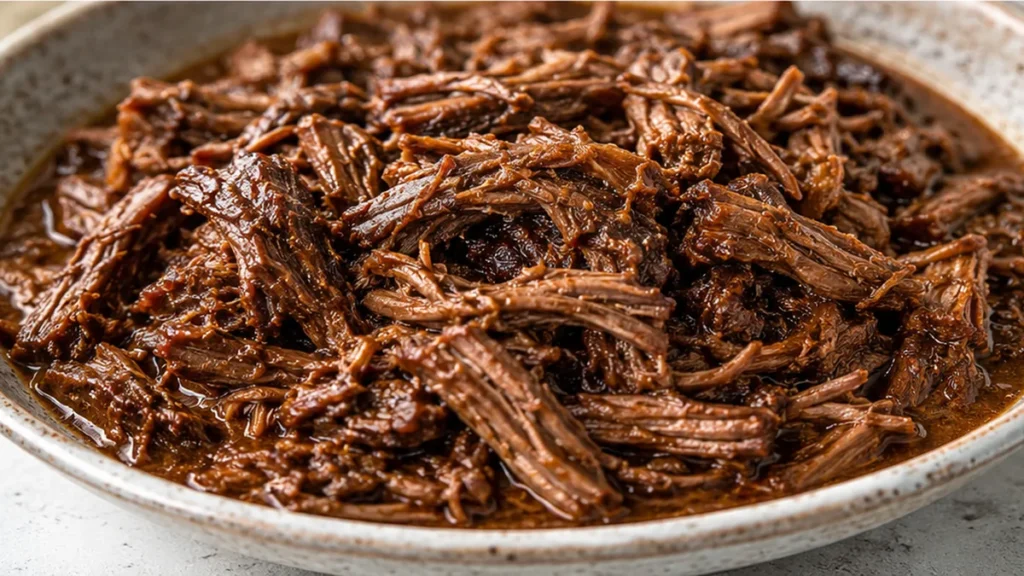
The secret to truly tender barbacoa beef lies in a slow, low braise that allows the connective tissues to break down, creating an incredibly succulent result. This barbacoa beef recipe simplifies the process, bringing authentic flavors to your kitchen with minimal effort. Rushing barbacoa beef leaves the meat tough. Patience matters for this dish. This version is designed for home cooks who want that deep, rich flavor without spending all day in the kitchen, perfect for feeding a crowd or meal prepping.
Key takeaways
- Using a beef chuck roast ensures tenderness due to its fat content.
- Acidity from lime juice balances flavors and aids in tenderizing.
- Maintaining the correct cooking temperature prevents dryness.
- Seasoning is key; aim for at least 1 teaspoon of salt per pound of meat.
Melt-in-Your-Mouth Barbacoa Beef!
Ingredients
- 3 lbs Beef chuck roast
- 2 Chipotles in adobo sauce (canned)
- 1 cup Gluten free beef broth
- 1 tbsp Minced garlic
- 2 Bay leaves
- 1 tbsp Ground cumin
- 1 tbsp Dried oregano
- 1 tsp Salt
- 1 tsp Pepper
- 1/4 tsp Ground cloves
- 1/4 cup Fresh lime juice
Instructions
- Season the beef generously with salt on both sides, then brown the chuck roast for 3-4 minutes per side in a cast iron skillet or similar pan over medium-high heat.
- Add all of the canned adobo sauce plus two whole chili peppers into a blender. Discard remaining chilis, unless you want a hotter sauce.
- Into the same blender add the minced garlic, ground cumin, dried oregano, salt, pepper, ground cloves, beef broth, and fresh lime juice and blend until smooth.
- Transfer the browned beef to a slow cooker or Instant Pot. Pour the blended sauce over the beef, ensuring it’s well coated. Add the bay leaves.
Video
Notes
Understanding the Cut: Why Beef Chuck Roast is Essential
The choice of beef chuck roast is crucial for achieving melt-in-your-mouth barbacoa beef. This cut contains a good amount of connective tissue and fat, which breaks down during the slow cooking process, enhancing the flavor and tenderness. Aim for a roast with a marbling ratio of around 20-30% fat to ensure optimal moisture retention and flavor infusion.
The Role of Spices and Acidity in Flavor Development
The spices used in this recipe, particularly ground cumin, dried oregano, and chipotles in adobo sauce, contribute significantly to the depth of flavor. The acidity from fresh lime juice not only brightens the dish but also helps to tenderize the meat. The ideal ratio of lime juice to beef is about 1/4 cup per 3 lbs of meat, providing a perfect balance without overpowering the dish.
Common Pitfalls: Overcooking and Underseasoning
One common mistake is overcooking the beef, which can lead to a dry texture. To avoid this, monitor the cooking temperature; it should be maintained at around 190°F (88°C) for optimal tenderness. Additionally, underseasoning can result in a bland dish. A good rule of thumb is to use at least 1 teaspoon of salt per pound of meat, adjusting based on personal taste.
Swaps and Their Impact on the Final Dish
- Substituting beef broth with chicken broth: This will yield a lighter flavor but may lack the rich, beefy depth that enhances the barbacoa.
- Using fresh garlic instead of minced: Fresh garlic can provide a sharper taste, but it may not blend as seamlessly into the sauce.
- Replacing lime juice with vinegar: While this can add acidity, it will impart a different flavor profile that may not complement the spices as effectively.
Unique Characteristics of Barbacoa Beef
What sets barbacoa beef apart from other slow-cooked meats is the combination of smoky, spicy flavors from the chipotles and the slow braising method that allows the meat to absorb these flavors deeply. Unlike other beef dishes, barbacoa is traditionally wrapped in banana leaves, which can enhance moisture retention and impart a subtle earthiness when available.
How to Properly Store Leftover Barbacoa Beef for Maximum Flavor
Leftover barbacoa beef can be stored effectively to maintain its rich flavors. Allow the beef to cool completely at room temperature, then transfer it to an airtight container. It can be refrigerated for up to 3-4 days. For longer storage, consider freezing the beef. Portion it into meal-sized servings and wrap tightly in plastic wrap, then place it in a freezer-safe bag. Properly stored, barbacoa beef can last up to 3 months in the freezer. When reheating, add a splash of beef broth to maintain moisture and prevent dryness.
Scaling the Recipe: How to Adjust Ingredients for Larger or Smaller Batches
Scaling the barbacoa beef recipe is straightforward. For larger gatherings, you can increase the beef chuck roast proportionally, ensuring to maintain the spice and liquid ratios. For example, doubling the recipe to 6 lbs of beef would require 4 chipotles, 2 cups of beef broth, and double the spices. Conversely, if halving the recipe, ensure you still use at least one chipotle for flavor depth, but adjust the broth and spices accordingly. Keep in mind that cooking time may vary slightly with larger or smaller batches, so monitor tenderness closely.
The Impact of Cooking Equipment on Barbacoa Beef Quality
The cooking equipment used can significantly affect the outcome of barbacoa beef. A slow cooker provides a consistent low heat, ideal for tenderizing the meat over several hours, typically 8-10 hours on low. An Instant Pot can reduce cooking time to about 60-90 minutes under high pressure, but may not develop the same depth of flavor as slow cooking. If using a Dutch oven, aim for a low oven temperature (around 300°F or 150°C) for 3-4 hours, ensuring a tight-fitting lid to retain moisture. Each method yields tender results, but the flavor and texture may vary slightly.
How Seasonal Ingredients Affect the Flavor Profile of Barbacoa Beef
Seasonal ingredients can enhance the taste of barbacoa beef. Fresh herbs, such as cilantro or parsley, added at the end of cooking can brighten the dish, especially in spring and summer. In fall and winter, root vegetables like carrots or parsnips can be added to the cooking liquid for additional sweetness and depth. The quality of ingredients, particularly the beef, can also impact flavor; grass-fed beef typically has a richer taste compared to grain-fed. Always choose the freshest ingredients available to ensure the best flavor.
How to Prepare Barbacoa Beef in Advance for Maximum Flavor
Preparing barbacoa beef ahead of time can enhance its flavors significantly. The key is to allow the dish to marinate and develop its taste. After cooking, let the barbacoa beef cool completely before storing it in an airtight container. Refrigerate for up to 3 days or freeze for up to 3 months. The flavors will deepen as it sits, so consider making it a day or two in advance. When reheating, do so gently over low heat to prevent the meat from drying out, adding a little beef broth if necessary to maintain moisture.
Understanding the Impact of Cooking Equipment on Barbacoa Beef Texture
The type of cooking equipment used can greatly affect the texture and flavor of barbacoa beef. Slow cookers, pressure cookers, and traditional Dutch ovens all yield different results. A slow cooker allows for even cooking over a longer period, resulting in tender meat. In contrast, a pressure cooker can drastically reduce cooking time while still achieving tenderness, but the texture might differ slightly. For the best results, aim for a cooking temperature of around 190°F (88°C) for optimal collagen breakdown, which contributes to that melt-in-your-mouth quality.
How Ingredient Quality Affects the Final Taste of Barbacoa Beef
The quality of your ingredients plays a crucial role in the final flavor profile of barbacoa beef. Fresh, high-quality beef chuck roast will yield a more flavorful and tender dish. Similarly, using fresh lime juice instead of bottled can enhance the acidity and brightness of the dish. When selecting spices, opt for whole spices that you can grind yourself for the best flavor. Additionally, seasonal ingredients can influence the overall taste; for instance, fresh herbs or locally sourced produce can elevate the dish’s freshness and complexity.
How to Achieve Optimal Flavor Development in Barbacoa Beef
Flavor development in barbacoa beef relies heavily on the balance of spices, acidity, and the cooking method. When using spices like cumin and oregano, it’s essential to toast them lightly in the cooking fat before adding them to the beef. This process enhances their aromatic qualities and deepens the overall flavor profile. Aim for a toasting time of about 1-2 minutes over medium heat. Additionally, the inclusion of lime juice not only adds acidity but also acts as a tenderizer, breaking down the meat fibers. For the best results, allow the beef to marinate in the lime juice and spices for at least 2 hours, or preferably overnight, to achieve maximum flavor penetration. The cooking process should be slow and low, ideally at a temperature of 225°F (107°C) for 6-8 hours, ensuring that the beef becomes tender and the flavors meld beautifully.
How to Properly Scale Barbacoa Beef for Different Gatherings
Scaling your barbacoa beef recipe can be straightforward, but it requires attention to detail to maintain flavor and texture. For larger gatherings, you can increase the beef chuck roast proportionally; however, consider that cooking time may vary. For every additional pound of beef, add approximately 30-45 minutes to the cooking time, ensuring that the internal temperature reaches at least 195°F (90°C) for optimal tenderness. When scaling spices, a general rule is to maintain the same ratio, but taste as you go, as larger quantities can sometimes intensify flavors unexpectedly. For smaller batches, cutting the recipe in half is typically effective, but be mindful to still include a full bay leaf and a complete chipotle for adequate flavor. Adjusting the cooking vessel size is crucial; a larger pot may require a longer cooking time to maintain consistent heat. Ensure the beef is submerged in the broth for even cooking, regardless of batch size.
Pro tips
- For extra depth of flavor, marinate the beef in the blended sauce overnight before cooking.
- If using a slow cooker, cook on low for 6-8 hours or high for 3-4 hours until fork-tender. Maintain an internal temperature of 160°F (71°C).
- Leftover barbacoa beef freezes well for up to 3 months. Thaw in the refrigerator overnight and reheat gently on the stovetop or in the oven at 300°F (150°C) with a splash of broth to prevent drying.
This barbacoa beef is a versatile and flavorful staple. Experiment with different serving styles, from classic tacos to loaded nachos, or even a hearty salad. Enjoy the rich, smoky flavors!
Frequently asked questions
Can I use a different cut of beef for barbacoa?
While beef chuck roast is ideal for its fat content and tenderness, you can use brisket or round cuts. However, these may result in a drier texture if not monitored closely during cooking.
How long should I cook the beef for the best results?
The beef should be cooked for about 8 hours on low in a slow cooker or 4-5 hours in a Dutch oven at 300°F (150°C). This allows the connective tissues to break down, resulting in tender meat.
Can I make barbacoa beef in an Instant Pot?
Yes, you can! Cook the beef on high pressure for about 60-75 minutes, followed by a natural release. This method significantly reduces cooking time while still achieving tender results.
What should I serve with barbacoa beef?
Barbacoa beef pairs well with warm tortillas, cilantro, diced onions, and avocado. It can also be served over rice or in tacos for a delicious meal.
More from Keto Dinners & Mains →