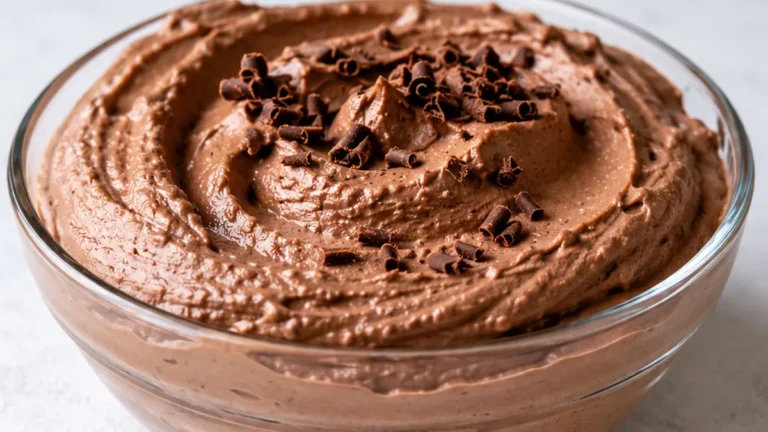
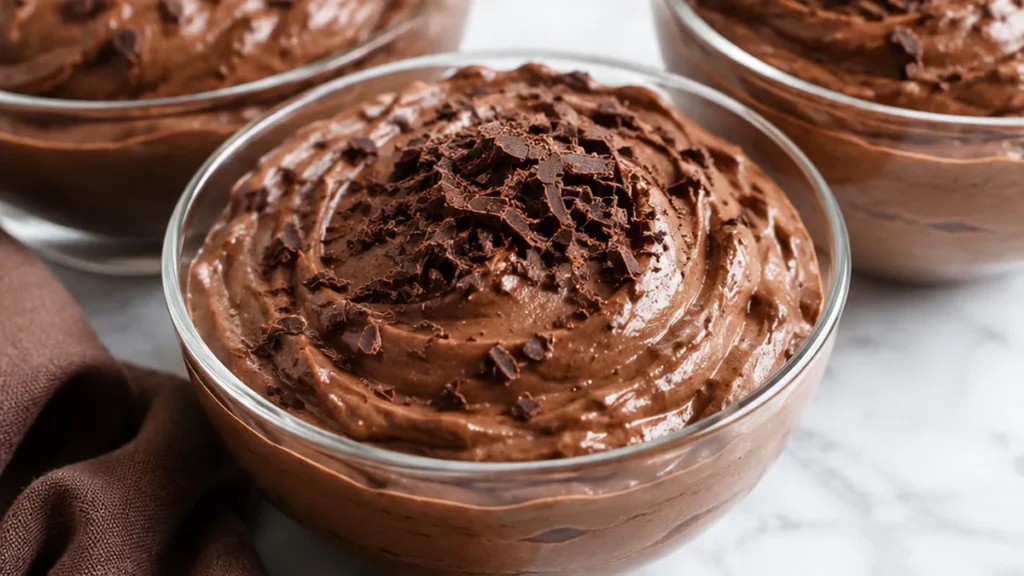
Creating a truly light and airy chocolate mousse hinges on one crucial step: properly folding in the whipped egg whites without deflating them. This chocolate mousse recipe provides a detailed approach to achieve that perfect, melt-in-your-mouth texture. This recipe leverages a precise balance of dark chocolate and cream, combined with carefully folded egg whites, ensuring a delicate and rich dessert. It’s ideal for those seeking an elegant treat without extensive culinary complexity.
Key takeaways
- Use high-quality chocolate for the best flavor.
- Whip egg whites until stiff peaks for a light texture.
- Carefully fold ingredients to maintain airiness.
- Avoid moisture when melting chocolate to prevent seizing.
Dreamy Dark Chocolate Mousse Recipe
Ingredients
- 8 ounces semi-sweet or dark chocolate, finely chopped
- 1/4 cup heavy cream
- 4 large egg yolks
- 1 tablespoon vanilla extract
- 1/2 teaspoon salt
- 5 egg whites
- 1 2 cups heavy cream
- chocolate shavings and flaky sea salt, for serving
Instructions
- In a glass bowl, combine the chocolate and 1/4 cup heavy cream. Melt in the microwave in 20-second intervals, stirring between each interval, or set over a pot of simmering water. Stir until smooth.
- Whisk in the egg yolks, one at a time, until fully incorporated. Stir in the vanilla and salt.
- Using an electric mixer, beat the egg whites until stiff peaks form. Add a spoonful of the whipped egg whites to the chocolate mixture to lighten it, then gently fold in the remaining egg whites until no streaks remain.
- Cover and chill the mousse until fully set, about 2 hours.
- Once chilled, add 1/2 cup heavy cream to the mousse and whip until soft and fluffy. Gradually add more cream, whipping until incorporated, and your desired consistency is reached.
- Spoon into serving glasses. Serve immediately, or refrigerate until ready to serve. Finish with chocolate shavings and flaky sea salt.
Video
Notes
Understanding the Role of Chocolate in Mousse
The type of chocolate you choose is crucial for achieving the desired texture and flavor of your chocolate mousse. Semi-sweet or dark chocolate, with a cocoa content of 60-70%, provides a rich flavor while maintaining a smooth consistency. The chocolate must be finely chopped to ensure it melts evenly. When melting, use a double boiler or microwave in short bursts, stirring frequently to prevent overheating, which can cause the chocolate to seize.
The Importance of Whipping Egg Whites
Egg whites are whipped to create the light and airy texture characteristic of mousse. To achieve the perfect peaks, ensure your mixing bowl and beaters are completely clean and free of grease, as any fat can inhibit the whipping process. Whip the egg whites until stiff peaks form, which usually takes about 4-6 minutes at medium-high speed. Gradually add sugar if desired, as this stabilizes the foam and adds sweetness.
Creating the Perfect Emulsion
Emulsion is key in chocolate mousse, combining fat from chocolate and cream with the liquid from egg yolks and whites. When combining the melted chocolate with egg yolks, ensure the chocolate is slightly cooled to avoid cooking the yolks. Gradually fold in the whipped egg whites to maintain volume, followed by heavy cream, which adds richness and enhances the mousse’s texture. Aim for a smooth, uniform mixture without deflating the whipped components.
Common Mistakes and How to Fix Them
- Problem: Mousse is too dense.
- Cause: Overmixing the whipped egg whites or cream can deflate them, leading to a denser texture.
- Fix: Gently fold the mixtures together, being careful not to lose volume.
- Problem: Chocolate seizes or becomes grainy.
- Cause: Overheating the chocolate or introducing moisture.
- Fix: Melt chocolate slowly and avoid water contact. If seized, add a small amount of cream to smooth it out.
- Problem: Mousse separates after chilling.
- Cause: Inadequate folding technique or incorrect ratios of ingredients.
- Fix: Ensure proper folding and maintain correct ratios of chocolate, cream, and egg whites.
Ingredient Substitutions and Their Effects
- Substitution: Use milk chocolate instead of semi-sweet.
- Effect: The mousse will be sweeter and less intense in chocolate flavor.
- Substitution: Substitute aquafaba for egg whites.
- Effect: The mousse can be made vegan, but the texture may be slightly less stable.
- Substitution: Use coconut cream instead of heavy cream.
- Effect: Adds a coconut flavor and makes it dairy-free, but may alter the texture slightly.
How to Store Chocolate Mousse for Maximum Freshness
Chocolate mousse can be stored in the refrigerator for up to 3 days. To maintain its airy texture, cover the mousse with plastic wrap, ensuring it doesn’t touch the surface to prevent condensation. For longer storage, consider freezing it. Place individual servings in airtight containers and freeze for up to a month. Thaw in the refrigerator overnight before serving, but note that freezing may slightly alter the texture, making it less airy.
Scaling the Recipe for Different Occasions
This chocolate mousse recipe can be easily scaled up or down to suit your needs. For smaller gatherings, halve the ingredients, yielding about 4 servings. Conversely, to serve a larger group, double the ingredients, which will yield about 12 servings. Ensure you maintain the same ratios of chocolate to cream and egg yolks to achieve the desired texture and flavor. When scaling, be cautious with the mixing and folding process to ensure the mousse retains its lightness.
Choosing the Right Equipment for Perfect Results
The equipment you use can significantly affect the outcome of your chocolate mousse. A heatproof bowl is essential for melting chocolate; glass or metal works best. A stand mixer or handheld electric mixer is recommended for whipping egg whites and cream, as achieving the right peaks is crucial. Additionally, using a rubber spatula for folding ensures gentle incorporation of the whipped ingredients, preserving the mousse’s airy texture. Avoid plastic bowls for whipping, as they can retain oils that inhibit proper whipping.
Pairing and Serving Suggestions to Enhance Flavor
When serving chocolate mousse, consider pairing it with complementary flavors to elevate the dessert. Fresh berries, such as raspberries or strawberries, add a tart contrast that balances the richness of the mousse. A dollop of whipped cream or a scoop of vanilla ice cream can enhance creaminess. For an extra touch, sprinkle flaky sea salt on top to enhance the chocolate flavor. Presentation matters; serve in elegant glassware to showcase the mousse’s luscious texture and color.
Understanding the Role of Temperature in Chocolate Mousse Preparation
Temperature control is critical when making chocolate mousse. The chocolate must be melted gently to avoid seizing, ideally at a temperature between 120°F (49°C) and 130°F (54°C). Overheating can cause the chocolate to become grainy, ruining the smooth texture of the mousse. After melting, allow the chocolate to cool slightly before incorporating it with the egg yolks and cream, ensuring that the mixture does not cook the yolks. Additionally, egg whites should be whipped to soft peaks at room temperature, around 70°F (21°C), to achieve the best volume and stability. Cold egg whites can lead to a denser mousse.
Batch Scaling: Doubling or Halving the Recipe
Scaling the chocolate mousse recipe requires careful consideration of ingredient ratios and mixing techniques. When doubling the recipe, maintain the same proportions of chocolate, cream, and eggs to preserve the desired texture. For instance, if you double the chocolate to 16 ounces, you should also double the heavy cream and egg components accordingly. However, be cautious with mixing times; larger batches may require additional whipping time for the egg whites to achieve the same volume. Conversely, when halving the recipe, ensure you use a smaller bowl for whipping egg whites, as a larger bowl can lead to inefficient aeration.
Serving and Pairing: Enhancing Your Chocolate Mousse Experience
Chocolate mousse can be served in various ways to elevate its appeal. Consider using elegant serving dishes like ramekins or martini glasses for a sophisticated presentation. Pairing options include fresh berries, which add a tart contrast to the rich chocolate, or a dollop of whipped cream for added creaminess. Flaky sea salt sprinkled on top enhances the chocolate’s flavor by balancing sweetness and bitterness. Additionally, seasonal ingredients like peppermint or orange zest can be incorporated to create variations that reflect different times of the year, making the dish versatile and exciting.
Why the Chocolate Mousse Can Become Grainy
Achieving a silky smooth chocolate mousse is heavily dependent on the chocolate’s quality and melting technique. If the chocolate is overheated or not melted properly, it can seize, leading to a grainy texture. To prevent this, melt the chocolate gently using a double boiler or microwave in short bursts (15-20 seconds) at 50% power. Aim for a temperature of around 120°F (49°C) to ensure the chocolate is melted but not too hot, as excessive heat can alter the emulsion.
How to Scale the Chocolate Mousse Without Compromising Texture
Scaling the chocolate mousse recipe requires careful attention to the ratios of ingredients, especially the egg whites and heavy cream. When doubling or halving the recipe, maintain the ratio of chocolate to cream (1:1.5) to ensure the mousse retains its lightness. For instance, if you use 16 ounces of chocolate, you should use 24 ounces of heavy cream. Additionally, when whipping egg whites, use a larger bowl for larger batches to allow for proper aeration. This will help maintain the mousse’s airy texture.
How to Achieve the Ideal Texture in Your Chocolate Mousse
The texture of chocolate mousse hinges on the proper incorporation of air into the mixture. Whipping the egg whites to stiff peaks is crucial; this process should take about 3-5 minutes at medium-high speed using a stand mixer. Under-whipped egg whites will result in a dense mousse, while over-whipped whites can become dry and grainy. When folding the whipped egg whites into the chocolate mixture, use a gentle hand to maintain the airiness. A common ratio is to fold one-third of the egg whites into the chocolate to lighten it before gently incorporating the rest. This technique ensures a light, airy mousse that melts in the mouth.
Understanding the Impact of Ingredient Quality on Flavor
The quality of your ingredients directly affects the final flavor of your chocolate mousse. Using high-quality chocolate (at least 70% cocoa) will yield a richer taste. Look for chocolate with minimal additives; the fewer the ingredients, the better the flavor. Heavy cream should also be fresh and of high quality, as it contributes to the mousse’s creaminess. Seasonal ingredients, such as fresh berries or citrus zest, can enhance the mousse when served as a garnish. Be mindful that using lower-quality chocolate or cream can result in a less satisfying flavor profile, making it essential to prioritize ingredient quality for the best outcome.
Pro tips
- For the best flavor, use high-quality dark chocolate (60-70% cacao) as it’s the star of the show.
- Ensure your egg whites are at room temperature before whipping; they will achieve more volume.
- When folding the egg whites, use a spatula and a gentle ‘cut and fold’ motion to preserve their airiness. Rushing this step gives a denser mousse, so patience is key.
- The mousse must chill for at least 2 hours to set properly. This is crucial for its structure and texture. For food safety, ensure egg yolks reach 160°F (71°C) if concerns about raw eggs are present; otherwise, use pasteurized eggs.
This dark chocolate mousse offers a delightful balance of richness and airiness, making it a truly satisfying dessert. Experiment with different toppings, from fresh berries to a drizzle of caramel, to customize your experience. Enjoy this luxurious treat!
Frequently asked questions
Can I make chocolate mousse in advance?
Yes, chocolate mousse can be made a day ahead of serving. Just ensure it is covered and stored in the refrigerator to maintain its texture and flavor.
What can I use instead of egg yolks?
For a vegan alternative, you can use silken tofu blended until smooth or a commercial egg replacer. However, the flavor and texture may differ slightly.
How long can I store chocolate mousse?
Chocolate mousse can be stored in the refrigerator for up to 3 days. It is best enjoyed fresh, but it will still taste good if kept properly.
Why is my mousse not setting?
If your mousse is not setting, it may be due to insufficient whipping of the egg whites or cream, or incorrect ratios of ingredients. Ensure all components are properly mixed and folded.
More from Keto Desserts & Sweets →